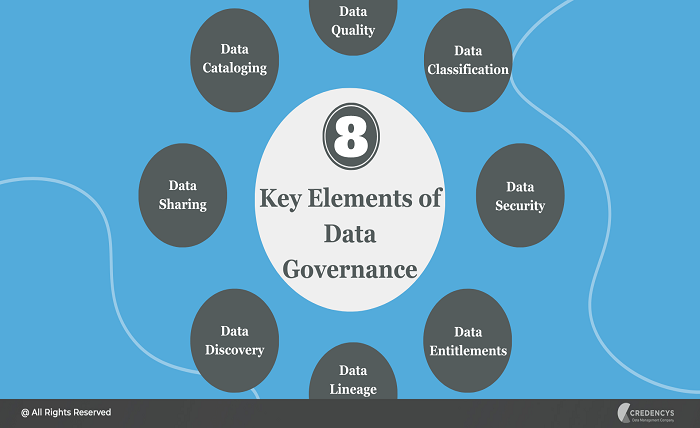
In today’s digital environment, organizations are generating and storing more data than ever before. This growth brings opportunity, but it also increases exposure to cyber threats, compliance failures, and internal misuse of sensitive information. As a result, building a strong data security governance program is no longer optional. It is a core requirement for sustainable business operations.
An effective governance framework ensures that data is properly protected, accessed responsibly, and managed in line with regulatory and organizational expectations. It also helps businesses respond quickly to incidents while maintaining trust with customers and stakeholders. This article explores the essential components that make such a program effective and practical in real-world environments.
Foundations of Data Security Governance in Modern Enterprises
At its core, data security governance defines how an organization controls, protects, and uses its data assets. It establishes accountability structures, decision-making authority, and enforceable policies that guide behavior across the entire organization.
A strong foundation begins with clear roles and responsibilities. Executives, IT teams, compliance officers, and department heads must understand their part in safeguarding data. Without this clarity, security efforts become fragmented and ineffective.
Another key foundation is visibility. Organizations must know what data they have, where it resides, and who can access it. This includes structured data in databases and unstructured data in emails, documents, and cloud storage. Without visibility, governance cannot function effectively.
Many organizations rely on structured frameworks and industry best practices to guide implementation. For example, the Mimecast data security governance guide explains how governance should extend beyond traditional perimeter security and account for the ways sensitive data moves through email, collaboration tools, cloud platforms, and shared digital environments.
Policy Development and Risk-Based Governance Structures
Policies are the backbone of any governance program. They define acceptable behavior, outline security requirements, and provide a consistent framework for decision-making. However, policies must be more than static documents. They need to be actionable and aligned with real business risks.
A risk-based approach ensures that governance efforts focus on the most critical threats. Instead of applying uniform controls everywhere, organizations prioritize high-value assets, sensitive data types, and vulnerable systems. This approach improves efficiency while strengthening overall protection.
Regular risk assessments are essential. They help identify new vulnerabilities, evolving threat landscapes, and changes in business operations. These assessments should feed directly into policy updates and control improvements.
In practical terms, the Mimecast guide to data security governance reinforces the importance of aligning governance policies with real-world communication channels, especially email and collaboration platforms, where phishing, accidental sharing, and data leakage risks are common.
Identity Management, Access Control, and Continuous Monitoring
One of the most important components of data security governance is controlling who can access what data. Identity and access management systems ensure that only authorized users can interact with sensitive information.
Role-based access control is commonly used to enforce least-privilege principles. This means users only receive the minimum level of access necessary to perform their duties. This reduces the risk of insider threats and accidental data exposure.
Multi-factor authentication adds another layer of protection by requiring additional verification beyond passwords. This is especially important in preventing unauthorized access from compromised credentials.
Continuous monitoring further strengthens governance by detecting unusual activity in real time. For example, repeated failed login attempts, abnormal data transfers, or access from unfamiliar locations can signal potential security incidents.
Organizations often integrate monitoring tools across systems to ensure full visibility. This aligns with the type of governance approach discussed by Mimecast, where monitoring, oversight, and policy enforcement are treated as ongoing requirements rather than one-time security tasks.
Data Classification, Encryption, and Protection Mechanisms
Not all data carries the same level of sensitivity. Effective governance programs classify data based on its importance, regulatory requirements, and potential impact if exposed. Common categories include public, internal, confidential, and highly restricted data.
Once classified, appropriate protection measures can be applied. Encryption is one of the most important techniques, ensuring that even if data is intercepted or accessed without authorization, it remains unreadable.
Encryption should be applied both at rest and in transit. Modern organizations also use tokenization and data masking to reduce exposure during processing or testing.
Data loss prevention technologies help enforce classification policies by monitoring and controlling how data moves across systems. These tools can block unauthorized sharing or alert administrators when sensitive information is at risk.
The Mimecast data security governance guide also highlights the need to protect data within communication platforms, particularly email and collaboration environments where sensitive information is frequently shared, forwarded, archived, or exposed through human error.
Incident Response Planning and Regulatory Compliance
Even the strongest governance systems cannot eliminate all risks. That is why incident response planning is a critical component of any data security strategy. A well-prepared organization can detect, contain, and recover from incidents quickly, minimizing damage and downtime.
An effective incident response plan includes clear escalation procedures, defined roles, and communication protocols. It also outlines technical steps for containment, eradication, and recovery.
Regular simulations and tabletop exercises help teams stay prepared. These exercises reveal gaps in response capabilities and improve coordination across departments.
Compliance is another essential aspect of governance. Organizations must adhere to laws and standards such as GDPR, HIPAA, or industry-specific regulations. Compliance requirements often dictate how data is stored, processed, retained, and shared.
Audits and reporting mechanisms ensure that governance practices meet regulatory expectations. Documentation plays a key role here, as regulators often require evidence of controls, policies, and incident handling procedures.
Guidance from Mimecast connects incident response readiness with compliance obligations, emphasizing that governance should support both security resilience and regulatory accountability.
Building a Culture of Accountability and Continuous Improvement
Technology and policies alone are not enough to ensure effective governance. Human behavior plays a significant role in data security outcomes. That is why building a culture of accountability is essential.
Employees must understand their responsibilities in protecting data. Regular training and awareness programs help reinforce best practices, such as recognizing phishing attempts, handling sensitive data correctly, and reporting suspicious activity.
Leadership involvement is also critical. When executives actively support governance initiatives, it sends a strong message across the organization that data protection is a priority.
Continuous improvement ensures that governance programs remain effective over time. Threat landscapes evolve, technologies change, and business needs shift. Governance frameworks must adapt accordingly.
Feedback loops, audits, and performance metrics help organizations identify areas for improvement. These insights can then be used to refine policies, enhance controls, and strengthen monitoring systems.
As outlined in Mimecast’s data security governance guide, governance maturity should be treated as an ongoing process. Organizations that continuously evaluate and improve their security posture are better positioned to manage risk, maintain compliance, and protect sensitive information across modern digital workflows.
Conclusion
An effective data security governance program is built on multiple interconnected components, including policy development, identity management, data classification, monitoring, incident response, and cultural alignment. Each element plays a vital role in ensuring that data is protected, properly managed, and compliant with regulatory requirements.
Rather than relying on isolated tools or reactive strategies, organizations must adopt a holistic approach that integrates people, processes, and technology. This ensures not only stronger protection against cyber threats but also greater operational resilience.
By reviewing resources such as the Mimecast data security governance guide, organizations can better understand how to extend governance beyond traditional security boundaries and into every digital interaction where data is created, shared, stored, and protected.
Ultimately, strong governance is not just about security. It is about trust, accountability, and long-term sustainability in a data-driven world.